


About
Place is a central concept in the humanities and social sciences, but it isn’t widely discussed in philosophy, where it is often overlooked in favour of space. The aim of this workshop is to explore the concept of place from a philosophical perspective, considering place in relation to perception, emotion and memory.
The one day workshop will conclude with a keynote “Leverhulme Lecture” by Professor John Sutton.

Exploring Place
Workshop
April. 16, 2024
LMB/036X, East campus, University of York
Schedule
10.00-10.45 | Introduction
10.45-12.00 | Keith Allen (University of York): Seeing places
12.45-2.00 | Pablo Fernandez Velasco (University of York): Place, dwelling and ecological grief
2.15-3.30 | Komarine Romdenh-Romluc (University of Sheffield): Fanon and the Constitution of Place through Perspective and Practice
4.00-5.30 | Leverhulme Lecture by John Sutton (University of Stirling; Macquarie University):
Place and memory: constructing the past from multiple traces
Location
LMB/036X: Law and Management Building, East Campus (Zone 8)

John Sutton
University of Stirling
Macquarie University
John Sutton is Emeritus Professor in Philosophy and Cognitive Science at Macquarie University and a Leverhulme Visiting Professor at the University of Stirling. His research on memory and skill seeks to bring humanities, social sciences, and cognitive sciences together, and to integrate conceptual, ethnographic, and experimental methods. Sutton is a Fellow of the Australian Academy of Humanities, and has held visiting fellowships at UCLA, Edinburgh, UCSD, London, and Durham. During 2022-23, he served as a Fellow at the Institute for Advanced Study in Paris, where he contributed to the 'Brain, Culture, and Society' program within the theme 'City Design and the Brain: a dialogue between architecture and neuroscience'.
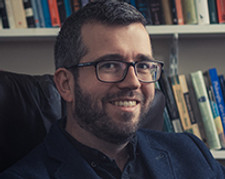
Keith
Allen
University of York
After studying at Cambridge and University College London, Keith Allen began his academic career at York University in 2007. One main focus of his research is the philosophy of colour. In his book "A Naïve Realist Theory of Colour" (Oxford University Press, 2016), he defends a naïve realist (or ‘primitivist’) theory of colour, positing that colours are mind-independent properties of objects distinct from those described by science. His work on colour is part of a broader interest in the philosophy of perception. Additionally, he explores related questions in the history of philosophy, such as theories of ideas in the early modern period and the work of the phenomenologist Merleau-Ponty.

Komarine Romdenh-Romluc
University of Sheffield
Komarine Romdenh-Romluc is Senior Lecturer in Philosophy at the University of Sheffield. She previously taught at the University of Nottingham. Komarine is interested in who we are. She works within the phenomenological tradition and uses its resources to understand the sorts of things we can do, and the ways we are shaped by the surrounding world. Some of her work examines Merleau-Ponty's phenomenological philosophy, and she is the author of the Routledge Guidebook to the Phenomenology of Perception. Her most recent research is about Frantz Fanon's anti-colonial thought, and she is writing a book about Fanon's philosophy.

Pablo
Fernandez Velasco
University of York
Pablo Fernandez Velasco is a British Academy postdoctoral fellow at the Department of Philosophy of the University of York, and he also holds an affiliated membership at the Spiers Lab within the Institute of Behavioural Neuroscience at University College London. His research revolves around philosophy of mind and cognitive science, with a strong emphasis on interdisciplinary collaboration. His primary interests lie in spatial cognition and environmental experience. At the moment, he is trying to combine phenomenological methods with contemporary insights from cognitive sciences to develop an integrated theory of ecological grief, laying the groundwork for future interdisciplinary inquiries into the psychological repercussions of environmental devastation.